
Investment Magazine / Special
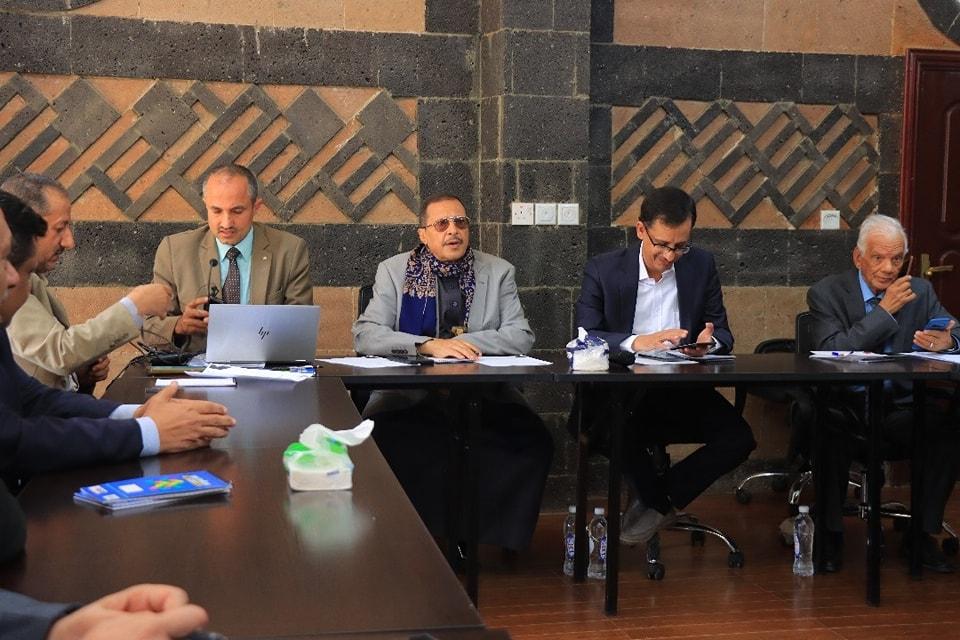
On January 15, 2025, the General Federation of Yemeni Chambers of Commerce and Industry organized an extensive meeting, both in-person and virtually, chaired by Mr. Yasser Abdul Karim Al-Mansoor, Chairman of the General Investment Authority. The meeting was attended by the leadership of the federation and heads of the commercial chambers in various governorates.
In his opening remarks, Mr. Yasser Abdul Karim Al-Mansoor emphasized that the new Investment Law, No. (3) of 2025, represents a significant shift in enhancing the business environment in Yemen. He highlighted that the law was developed in partnership with the private sector since 2012, involving extensive participation from private sector representatives throughout all stages of its preparation to ensure alignment with investors' aspirations.
Al-Mansoor also stated that the Investment Authority would launch an awareness campaign to introduce investors to the advantages of the law. This campaign will be led by a media committee chaired by the Minister of Economy, Industry, and Investment, with plans to hold an investment conference in six months to activate the law in practice.
On his part, Mr. Mohammed Abduh Saeed, Chairman of the General Federation of Yemeni Chambers of Commerce and Industry, commended the efforts of the General Investment Authority in drafting the law. He confirmed that the incentives and guarantees provided by the law would enhance investor confidence and create an attractive environment for investment. He also urged businessmen, both domestically and abroad, to seize the available investment opportunities, which would contribute to achieving economic stability.
Dr. Abdul-Basit Mohammed, the legal advisor to the Federation, provided a detailed presentation on the advantages and incentives offered by the new law. These include guarantees related to the protection of property rights, equal treatment, guaranteed transfer of funds, and a set quota for foreign labor. He also highlighted investment incentives, including support for small and medium enterprises with capital under $100,000 and various classifications of incentives (general, additional, and special) based on the nature of the projects.
Dr. Abdul-Basit also noted that the law emphasizes protection and encouragement for strategic projects, including those related to energy, contract farming, and public-private partnerships. Moreover, it ensures that existing projects before the law's enactment can also benefit from the granted incentives.
The meeting concluded with a discussion session where attendees underscored the importance of quickly implementing the law and overcoming any obstacles to its application. The participants also stressed the need for establishing specialized economic courts to resolve investment disputes, which would foster a climate of trust among investors and achieve the desired economic stability.
Comments