Investment Magazine / Written by Ahmed Al-Tayyar
An evaluation of the National Strategy for the Development of Yemen's Pharmaceutical Industry (2019-2024) has shown notable progress in enhancing local production, self-sufficiency rates, and reducing dependency on imports. Additionally, there has been significant development in human resource capabilities and the improvement of pharmaceutical product quality.
Eng. Mohammed Al-Furza'i, Head of the Projects Sector at the General Investment Authority and Acting Head of the Promotion Sector, stated that the achievement rate for the strategy's goals had reached approximately 58.04%, reflecting concerted efforts to strengthen the pharmaceutical industry.
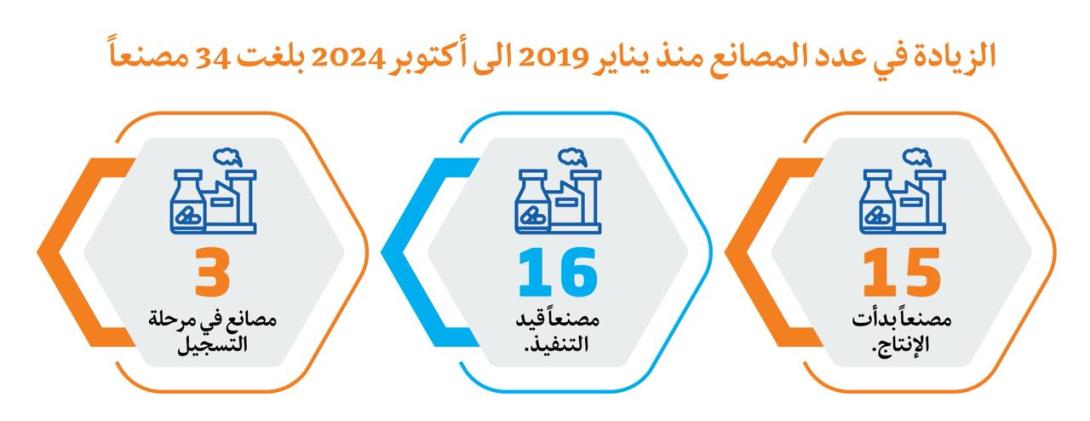
Since the launch of the strategy in January 2019, the sector has experienced a substantial increase in the number of pharmaceutical factories. The number of factories rose from just 10 (including one government-owned) to 34 factories by October 2024.
According to the Authority's data, 15 factories have started production, 16 are still under construction, and 3 are in the registration phase.
Increase in Pharmaceutical Factories from January 2019 to October 2024:
- 15 factories have started production.
- 16 factories are under construction.
- 3 factories are in the registration phase.
Infographic
The sector has also seen a remarkable development in the number of pharmaceutical products produced locally, which has increased from 952 items at the beginning of 2019 to 2,152 items by 2024. This growth has led to an increase in the local production share of pharmaceuticals from 10.1% to about 28%, contributing to a reduction in the import bill.
Detailed Goal Execution Levels:
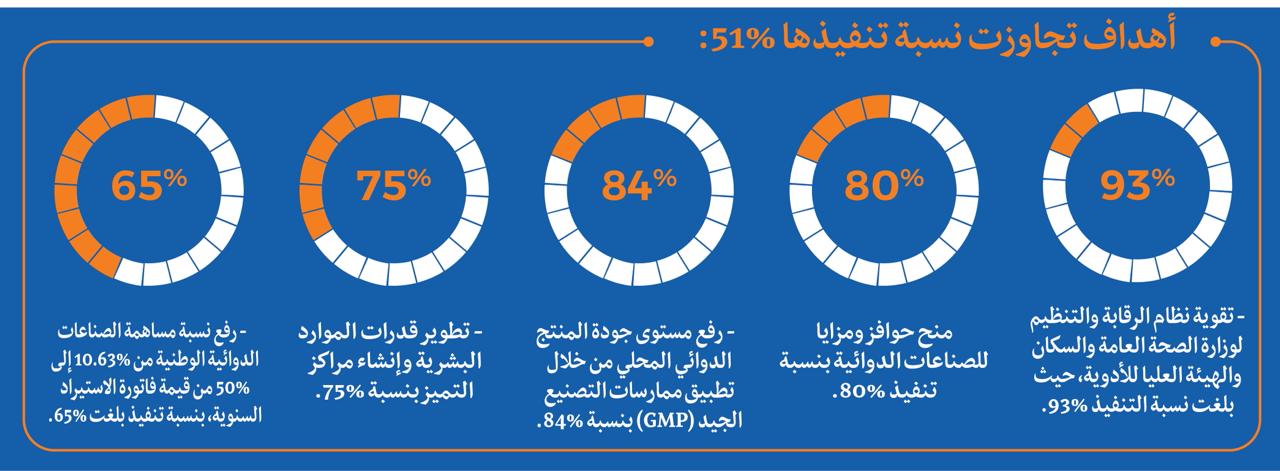
Goals with Execution Rates Over 51%:
- Strengthening the regulatory and oversight system of the Ministry of Public Health and Population and the Supreme Pharmaceutical Authority, with an execution rate of 93%.
- Providing incentives and benefits to pharmaceutical industries, with an execution rate of 80%.
- Enhancing the quality of local pharmaceutical products through the implementation of Good Manufacturing Practices (GMP), with an execution rate of 84%.
- Developing human resources capabilities and establishing centers of excellence, with an execution rate of 75%.
- Increasing the contribution of domestic pharmaceutical industries from 10.63% to 50% of the annual import bill, with an execution rate of 65%.
Infographic
Goals with Execution Rates Between 25% and 50%:
- Contributing to meeting emergency and relief medicine needs with locally produced drugs, at an execution rate of 50%.
- Developing the raw materials industry and packaging requirements, with an execution rate of 45%.
- Producing modern and advanced medications to meet local market needs, with an execution rate of 45%.
Infographic
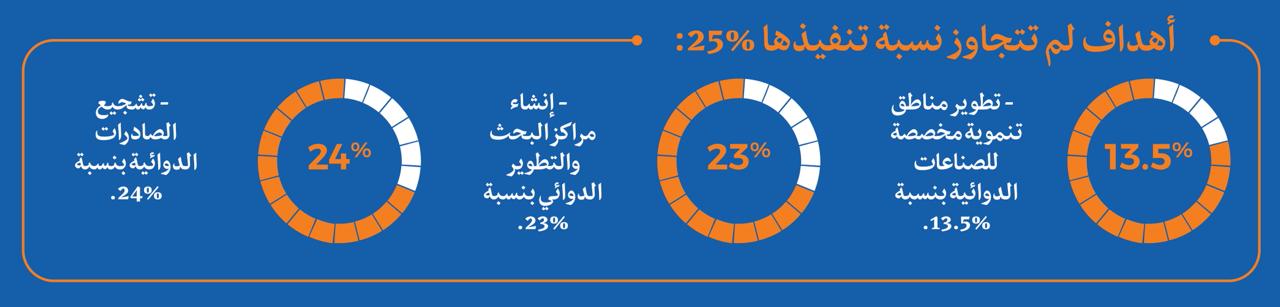
Goals with Execution Rates Below 25%:
- Developing designated industrial zones for the pharmaceutical sector, with an execution rate of 13.5%.
- Establishing pharmaceutical research and development centers, with an execution rate of 23%.
- Encouraging pharmaceutical exports, with an execution rate of 24%.
Infographic
Challenges and Difficulties: The strategy continues to face significant challenges due to the exceptional conditions in the country, including regional instability, difficulty in sourcing raw materials, and restrictions on transportation and distribution. Despite these challenges, progress has been made in several critical areas of the strategy, underscoring the importance of continued support for this vital sector.
It is certain that the National Strategy for the Development of the Pharmaceutical Industry in Yemen is on track to achieve its goals despite the extraordinary circumstances facing the country. With ongoing efforts, the strategy is expected to significantly improve healthcare standards, provide high-quality medicines at affordable prices, and strengthen reliance on domestic production to meet national needs.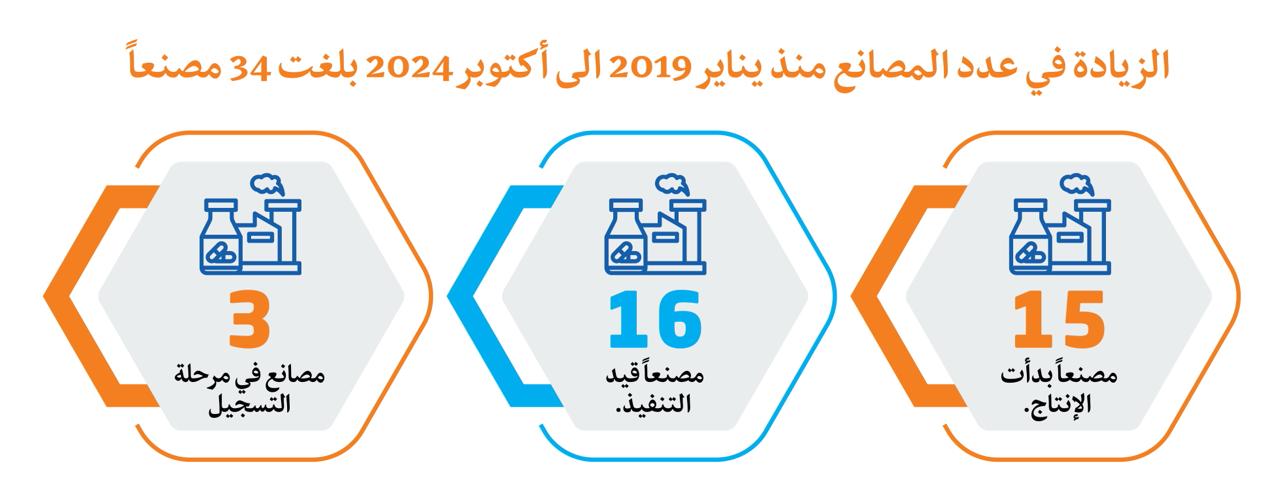
Comments