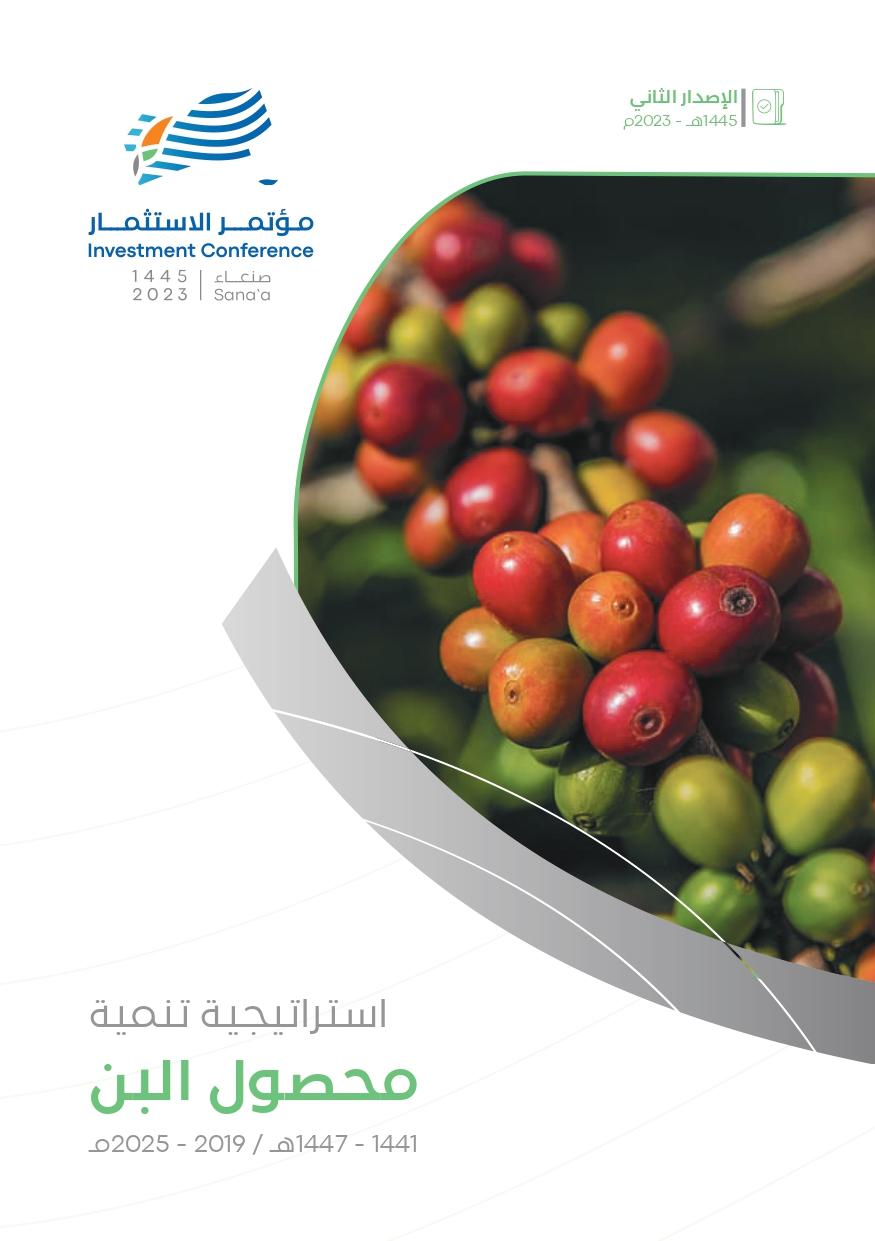
Yemen’s Coffee Development Strategy (2019-2025): A Promising Economic Bet
Investment Magazine – Exclusive
As the Sanaa International Coffee Festival 2025 kicks off tomorrow, February 16-19, under significant government sponsorship and with broad participation from the private sector, attention is turning to Yemen’s Coffee Development Strategy (2019-2025). This ambitious initiative aims to restore the glory of Yemeni coffee and strengthen its position in global markets.
Yemeni Coffee: An Economic Treasure and Cultural Heritage
Yemeni coffee is among the finest in the world, known for its unique flavor and high quality. Its distinctiveness stems from the mountainous terrain and climate in which it is cultivated. The history of Yemeni coffee exports dates back to the 15th century throughthe Port of Mocha, from which the globally renowned" Mocha Coffee" derives its name. Today, Yemeni coffee remains one of the most sought-after products in the international coffee trade.
A Strategic Vision to Boost the National Economy
The Coffee Development Strategy seeks to achieve multiple economic and agricultural objectives, primarily "increasing production and exports, which will bolster the national economy by generating foreign currency revenue. The strategy aims to "export 50,000 tons annually by 2025, with an average price ranging between" $15-$20 per kilogram, potentially generating"$1 billion in annual revenue.
Additionally, coffee revenues could cover Yemen's "annual wheat and flour needs, contributing to" food security. The initiative is also expected to improve the livelihoods of thousands of farmers who rely on coffee cultivation as their primary source of income.
The Role of the Ministry of Agriculture, Fisheries, and Water Resources
The Ministry of Agriculture, Fisheries, and Water Resources plays a crucial role in implementing this strategy by:
- Launching programs and projects to increase coffee production and enhance its quality.
- Providing financial and technical support to farmers and agricultural associations.
- Conducting research and studies to develop advanced coffee cultivation techniques.
- Promoting and marketing Yemeni coffee in local and international markets.
Challenges Facing the Coffee Sector
Despite the high expectations for this strategy, Yemen’s coffee sector faces several significant challenges, including:
-Water scarcity and difficulties in providing supplementary irrigation.
-Limited agricultural land suitable for coffee cultivation.
-The shift of arable land to qat cultivation, reducing coffee-growing areas.
-Weak investment in infrastructure and production.
-Lack of specialized research and studies on coffee development.
Programs and Initiatives to Support Coffee Cultivation
To address these challenges, the strategy includes several key initiatives:
-Establishing the General Administration for Coffee to coordinate development efforts.
-Restoring agricultural terraces and improving modern irrigation systems.
-Producing and distributing two million coffee seedlings annually to farmers.
-Organizing an annual conference on Yemeni coffee to enhance production and quality.
-Providing farmers with modern agricultural, harvesting, and storage technologies.
-Promoting Yemeni coffee globally through participation in international exhibitions.
Yemeni Coffee in Global Markets:
Promising Prospects
Developing Yemen’s coffee sector is expected to lead to:
-Expanding the cultivated area from 34,000 hectares to 43,000 hectares by 2025.
-Increasing production from 19,286 tons to over 50,000 tons annually.
-Boosting coffee exports from 3,000 tons to 40,441 tons annually.
-Generating over $600 million in annual revenue.
-Strengthening Yemen’s position as a leading producer of high-quality coffee.
Conclusion: A Bold Strategy for a Thriving Future
As the Sanaa International Coffee Festival 2025 unfolds, the Coffee Development Strategy stands out as a bold plan to boost the national economy, achieve agricultural sustainability, and preserve Yemen’s rich coffee heritage. While significant challenges remain, the combined efforts of the government and private sector could position Yemeni coffee as a key economic driver and a source of national pride.
Comments