Introduction:
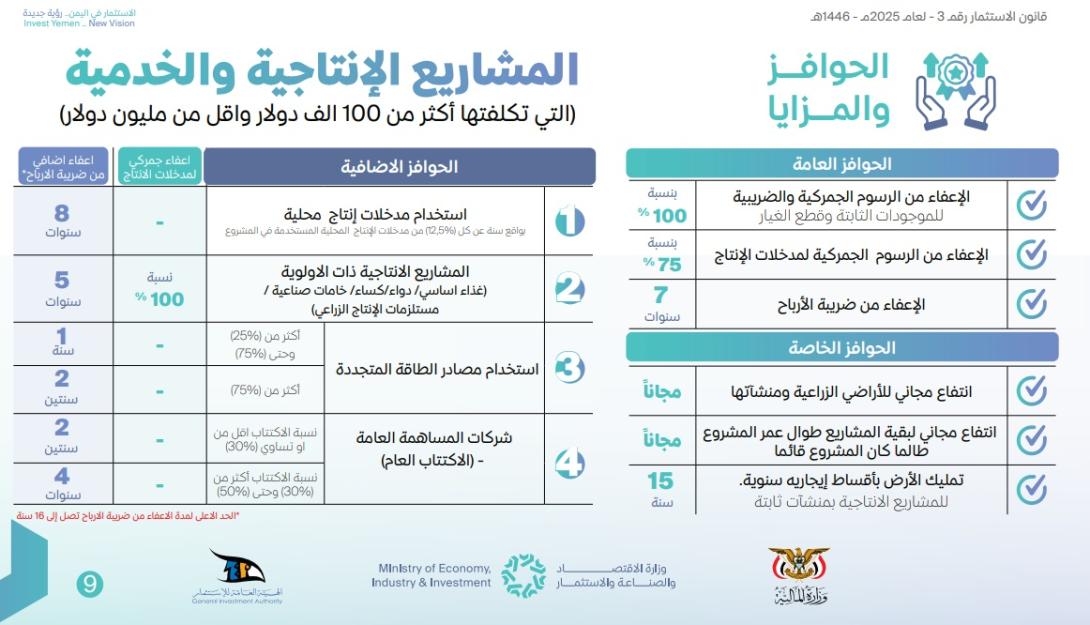
The government is keen to promote investment in productive and service projects by offering a range of financial and administrative incentives aimed at reducing the financial burden on investors and stimulating economic growth. These incentives are specifically targeted at projects with costs ranging between $100,000 and $1 million, ensuring maximum benefit from both local and foreign investments.
General Incentives:
1. Exemption from Customs and Tax Duties: A full exemption from customs and tax duties on fixed assets and spare parts is provided, which helps reduce establishment and operational costs.
2. Exemption from Customs Duties on Production Inputs: Production inputs are exempt from customs duties throughout the project's lifespan, enhancing production capacity and lowering operational expenses.
3. Exemption from Profit Tax: Eligible projects are granted an exemption from profit tax, encouraging investment in productive and service sectors.
Additional Incentives:
1. Use of Local Production Inputs: Additional incentives ranging from 75% to 100% are offered to projects that utilize local production inputs, encouraging reliance on domestic resources and supporting the national economy.
2. Priority Production Projects: Additional incentives are provided to projects operating in priority sectors such as food, textiles, and agriculture, aimed at boosting local production and reducing dependency on imports.
3. Use of Renewable Energy Sources: Additional incentives are granted to projects that rely on renewable energy sources, promoting environmental sustainability and reducing carbon emissions.
Special Incentives:
1. Free Land Use: Eligible projects are granted free use of agricultural land and related facilities, contributing to lower operational costs.
2. Land Ownership through Installments: Land ownership is offered to productive projects with fixed structures through annual rental installments, providing financial flexibility and encouraging long-term investment.
Conclusion:
These incentives serve as an effective tool to stimulate investment in productive and service projects by reducing financial and administrative costs and enhancing the competitiveness of these ventures. Furthermore, these incentives support the local economy by encouraging the use of domestic resources and promoting environmental sustainability.
Comments